
ELECTROLYSIS – PERMANENT HAIR REMOVAL IN NORTH VANCOUVER
Advanced Canadian Technology | All Hair Colours | Precision Permanent Hair Removal
I Care Beauty Clinic – North Vancouver, BC
Starting at $40 for 15 minutes
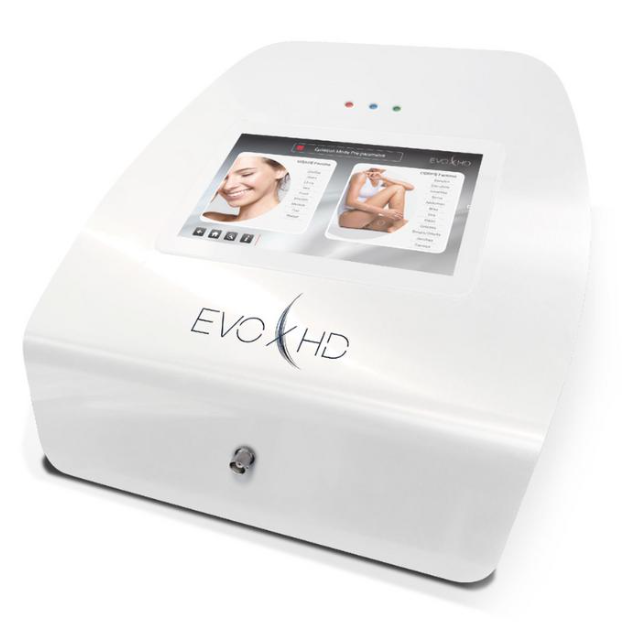
At I Care Beauty Clinic, we provide professional electrolysis treatments using the Canadian-made Silhouet-Tone Evolution XHD, an advanced professional electrolysis system designed for precise, individualized permanent hair removal.
Electrolysis is particularly beneficial for people with white, grey, blonde, red, fine, silky, or stubborn unwanted hair that may not respond effectively to laser hair removal.
It is also an option for selected clients with unwanted hair within tattooed areas, those who cannot undergo laser hair removal, and people who have completed laser hair removal but still have a few remaining hairs.
Electrolysis can permanently remove hair from successfully treated follicles. However, because hair grows in different cycles, multiple appointments are usually necessary to achieve the desired results.
Our goal is to provide professional, individualized treatments with realistic expectations, appropriate skin assessment, and clear preparation and aftercare instructions.
What Is Electrolysis?
Electrolysis is an established method of permanent hair removal that uses controlled electrical energy to destroy the cells responsible for hair growth within individual hair follicles.
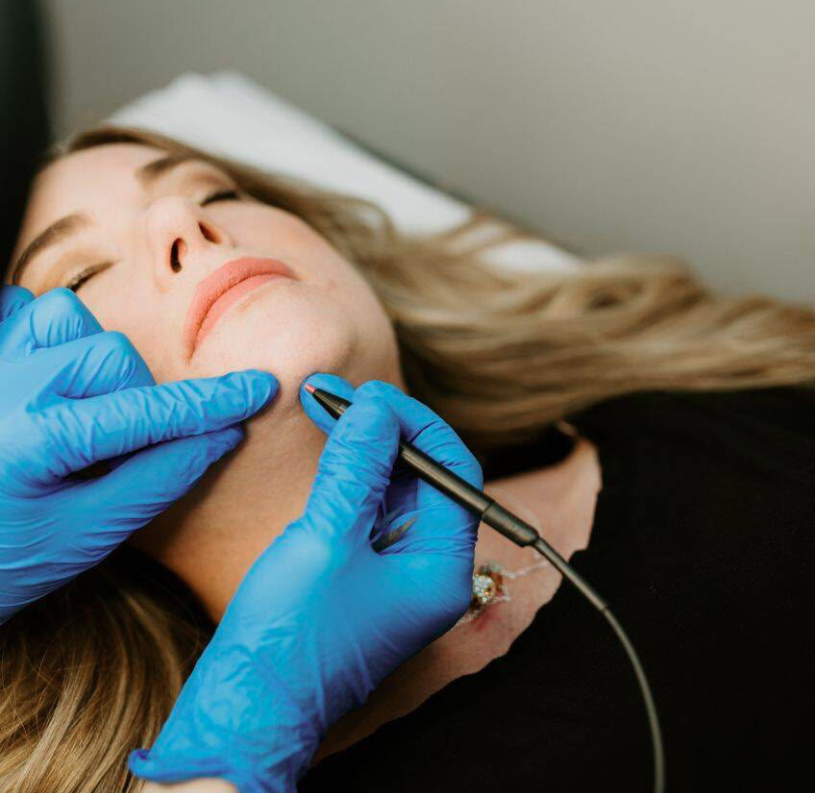
During the treatment, a trained practitioner gently inserts a very fine sterile probe into the natural opening of the hair follicle.
Controlled electrical energy is delivered to the follicle, targeting the structures responsible for producing hair.
Once the follicle has been adequately treated, the hair is gently removed using tweezers.
Unlike laser hair removal, electrolysis does not depend on the colour or pigment of the hair.
This means electrolysis can treat a wide range of hair colours, including:
- White hair
- Grey hair
- Blonde hair
- Red hair
- Light-coloured hair
- Brown hair
- Black hair
- Selected fine and silky hair
- Stubborn remaining hairs after laser treatment
The treatment works on individual follicles rather than treating large groups of hairs simultaneously.
Successfully destroyed hair follicles cannot regrow hair. However, follicles that were not completely treated, as well as previously inactive follicles that later become active, may produce hair and require additional treatment.
Our Electrolysis Device – Silhouet-Tone Evolution XHD
Professional Electrolysis Technology Made in Canada
At I Care Beauty Clinic, we use the Silhouet-Tone Evolution XHD, a Canadian-made professional electrolysis device.
Equipment Information
- Manufacturer: Silhouet-Tone
- Device: Evolution XHD / Évolution X HD
- Model: 411026
- Country of manufacture: Canada
- Technology: Professional electrolysis
- Frequency options: 6.78 MHz, 13.56 MHz, and 27.12 MHz
- Treatment methods: Thermolysis, galvanic electrolysis, and Blend
The Evolution XHD allows the practitioner to select treatment parameters according to hair characteristics, follicle structure, treatment area, and individual skin response.
Three Electrolysis Methods
Thermolysis
Uses high-frequency electrical energy to generate controlled heat within the follicle, damaging the cells responsible for hair growth.
Galvanic Electrolysis
Uses direct electrical current to create a chemical reaction within the follicle that destroys hair-growth cells.
Blend Method
Combines thermolysis and galvanic electrolysis to target the follicle using both thermal and chemical effects.
The practitioner determines the appropriate method and settings according to individual treatment needs.
Our equipment is designed to support precision treatment, but client comfort, treatment response, and outcomes vary.
Who Is Electrolysis Best For?
Electrolysis may be particularly useful for clients who are not suitable candidates for laser hair removal or who have remaining unwanted hair after laser treatment.
White and Grey Hair
White and grey hairs contain little or no melanin.
Because conventional laser hair removal relies on hair pigment to absorb laser energy, white and grey hairs generally respond poorly to laser treatment.
Electrolysis does not depend on melanin and can target these follicles directly.
Blonde, Red, Fine, and Silky Hair
Very light blonde, red, or fine silky hairs may contain insufficient pigment for effective laser hair removal.
Electrolysis may be a suitable alternative because the practitioner treats each follicle individually.
Very fine hairs can be more challenging to treat, and suitability depends on whether the practitioner can accurately identify and access the follicle.
Hair Within Tattooed Areas
Laser hair removal is generally avoided directly over tattoos because tattoo pigments can absorb laser energy, increasing the risk of burns, blistering, pigmentation changes, and damage to the tattoo.
Electrolysis may be considered for unwanted hair within tattooed areas because it does not use laser light.
However, treatment is not risk-free. The practitioner must evaluate the tattoo, skin condition, hair characteristics, and potential risk of pigmentation changes or tattoo appearance changes before proceeding.
Sensitive Skin or Clients Unsuitable for Laser Hair Removal
Some clients cannot undergo laser hair removal because of their skin condition, previous reactions, or other individual factors.
Electrolysis may be considered as an alternative following professional assessment.
However, electrolysis is not automatically safe for every sensitive skin type. Active irritation, eczema flare-ups, infections, or other skin conditions may require treatment to be postponed.
Remaining Hair After Laser Hair Removal
Some clients complete six, eight, ten, or more laser hair removal sessions and still have a small number of remaining hairs.
These hairs may be too light, too fine, or otherwise poorly responsive to additional laser treatments.
Electrolysis may be useful for targeting these remaining individual hairs.
This is particularly common for clients with stubborn hair on the:
- Chin
- Upper lip
- Jawline
- Sideburns
- Cheeks
- Neck
Electrolysis can complement a completed laser hair removal program by targeting remaining follicles individually.
The skin must be fully recovered from previous laser treatment before electrolysis begins.
Electrolysis for Hormonal Hair Growth
Facial Hair, Chin Hair, and Hormone-Related Hair Growth
Hormonal changes can influence hair growth in both women and men.
Some people develop unwanted coarse or fine hair on the chin, jawline, upper lip, neck, chest, abdomen, or other body areas.
Possible contributing factors include:
- Polycystic ovary syndrome (PCOS)
- Menopause and perimenopause
- Changes in androgen activity
- Genetic or hereditary factors
- Certain medications
- Other hormonal or endocrine conditions
Electrolysis can permanently remove hair from successfully treated follicles, including follicles producing hormonally influenced hair.
However, electrolysis does not correct the underlying hormonal condition.
Hormonal changes may activate previously inactive follicles, causing new hair to appear even after previously treated follicles have been permanently destroyed.
For this reason, clients with hormonally influenced hair growth may need a longer treatment program or occasional future appointments.
If unwanted hair growth is sudden, rapidly increasing, or accompanied by other hormonal symptoms, a medical assessment may be recommended.
Hair Growth in Intimate or Private Areas
Hormonal changes may also influence hair growth in intimate or private body areas.
Electrolysis may be technically suitable for selected hair follicles in these regions, but treatment requires additional consideration of skin sensitivity, anatomy, hygiene, practitioner training, privacy, and individual medical history.
Treatment of intimate areas is not automatically available and must be confirmed directly with I Care Beauty Clinic.
A private consultation is required before determining whether treatment can be provided.
Electrolysis Treatment Areas
Electrolysis may be considered for unwanted hair on many facial and body areas.
Facial Areas
- Upper lip
- Chin
- Jawline
- Sideburns
- Cheeks
- Neck
- Between the eyebrows
- Selected other facial areas
Body Areas
- Underarms
- Arms
- Hands and fingers
- Chest
- Abdomen
- Back
- Legs
- Toes
- Other suitable body areas
Certain sensitive areas, including intimate regions and areas close to the eyes, require additional assessment and may not be available for treatment.
All treatment areas are subject to professional evaluation.
Electrolysis Treatment Prices
Transparent Pricing Based on Treatment Time
At I Care Beauty Clinic, electrolysis appointments are charged according to treatment duration rather than a fixed body-area price.
Appointment Duration | Price |
15 Minutes | $40 |
30 Minutes | $75 |
45 Minutes | $110 |
60 Minutes | $140 |
Each Additional 15 Minutes After 60 Minutes | $25 |
All prices are in Canadian dollars.
15-Minute Appointment – $40
Suitable for a few isolated hairs, small facial areas, or short maintenance appointments.
30-Minute Appointment – $75
Suitable for a moderate number of unwanted hairs or a localized treatment area.
45-Minute Appointment – $110
Suitable for clients with more follicles requiring treatment or multiple small areas.
60-Minute Appointment – $140
Suitable for clients who require longer treatment sessions because of hair density, treatment area, or their individualized plan.
Extended Treatment Appointments
Additional treatment time after the first 60 minutes is charged at $25 per 15 minutes.
For example:
- 75 minutes – $165
- 90 minutes – $190
- 105 minutes – $215
- 120 minutes – $240
Extended appointments depend on practitioner availability, skin tolerance, and treatment suitability.
The amount of hair that can be treated during each appointment varies.
How Many Electrolysis Sessions Will I Need?
Electrolysis Requires Multiple Appointments
Although electrolysis can permanently destroy individual hair follicles, complete treatment of an area normally requires repeated appointments.
This is because hair follicles follow different growth cycles, and not all hairs are visible or accessible at the same time.
Some hairs are actively growing, while others are resting or shedding.
Previously inactive follicles may produce visible hairs during later weeks or months.
The number of appointments depends on:
- Treatment area
- Hair density
- Hair thickness
- Hair growth cycles
- Previous shaving, waxing, or plucking
- Hormonal influences
- Follicle depth and structure
- Skin sensitivity
- Individual treatment response
- Appointment duration and consistency
How Long Does a Complete Electrolysis Program Take?
Small areas with only a few isolated hairs may require relatively few appointments.
Larger or denser areas can require many sessions over several months or longer.
For some clients, reaching their desired level of clearance may take approximately 12–18 months or longer, particularly when treating dense or hormonally influenced hair growth.
This is not a guaranteed treatment timeline.
A practitioner cannot accurately promise a fixed number of appointments before assessing the hair and observing the client’s response.
Does Hair Come Back After Electrolysis?
A follicle whose hair-growth cells have been successfully destroyed cannot produce another hair.
However, hair may appear in the same general area because:
- Some follicles may not have been completely destroyed during earlier treatments.
- Other follicles may enter a visible growth phase.
- Hormonal changes may activate previously inactive follicles.
- Additional hairs may become noticeable as surrounding hairs are removed.
For this reason, repeated appointments and consistent treatment planning are important.
How Often Should Electrolysis Sessions Be Scheduled?
Recommended Treatment Intervals
The appropriate interval depends on the amount of visible hair, skin recovery, treatment area, and individual growth patterns.
Beginning of Treatment
For clients with significant visible hair growth, appointments may be recommended approximately every 1–2 weeks.
Some clients may require more frequent short appointments if their skin has recovered and the practitioner considers it appropriate.
During the Treatment Program
As the number of visible hairs decreases, appointments may be scheduled approximately every 2–4 weeks.
Later Stages
When only a few hairs remain, appointments may be spaced farther apart according to individual hair growth.
These intervals are general guidance, not a fixed schedule.
The same irritated or incompletely healed area should not be repeatedly treated before adequate recovery.
Your practitioner will determine the appropriate frequency.
Electrolysis Before-Care Instructions
Important Preparation Before Your Appointment
Correct preparation helps the practitioner identify individual hairs and treat them effectively.
- Do Not Shave Immediately Before Your Appointment
The practitioner must be able to see and grasp the hair with tweezers after treating the follicle.
Avoid shaving the treatment area for approximately 3–5 days before your appointment, or longer if your hair grows slowly.
The exact amount of growth needed varies. The practitioner may recommend a different preparation period.
- Do Not Wax, Pluck, or Thread
Avoid waxing, tweezing, threading, or using an epilator before treatment.
These methods remove hair from the follicle, making it difficult to locate and treat.
Ideally, allow several weeks after your last hair-removal method that pulls hair from the root, depending on regrowth.
- Keep the Skin Clean
Arrive with clean skin.
Avoid applying heavy creams, oils, or makeup directly over the treatment area unless instructed otherwise.
- Avoid Irritating Skincare Products
Depending on your skin sensitivity, the practitioner may recommend temporarily avoiding:
- Retinol and retinoids
- Strong exfoliating acids
- Harsh scrubs
- Irritating skincare products
- Other treatments that compromise the skin barrier
- Avoid Sunburn and Significant Skin Irritation
Do not attend electrolysis treatment with active sunburn, open wounds, or significant irritation in the planned area.
- Inform the Practitioner About Medical Conditions
Before treatment, disclose relevant conditions, including:
- Pacemakers or implanted electrical devices
- Heart conditions
- Diabetes or impaired wound healing
- Bleeding disorders
- History of keloid or abnormal scarring
- Active infections
- Eczema, dermatitis, or other skin conditions
- Pregnancy
- Current medications
- Previous reactions to electrolysis or aesthetic procedures
Certain medical conditions or implanted devices may require medical clearance or make electrolysis inappropriate.
- Stay Comfortable and Hydrated
Maintain normal hydration and follow the clinic’s instructions for your appointment.
- Do Not Stop Prescribed Medications Without Medical Advice
Clients should never independently discontinue prescribed medication to prepare for electrolysis.
Can I Shave Between Electrolysis Appointments?
It is important to distinguish shaving from plucking.
Do not shave immediately before your electrolysis appointment, because the practitioner needs enough visible hair to grasp with tweezers.
Between appointments, careful shaving or trimming may be permitted if necessary, provided the skin is fully healed.
However, clients must stop shaving sufficiently early before their next session so that visible hair is available for treatment.
Do not wax, pluck, thread, or use an epilator during your electrolysis program unless specifically instructed by your practitioner.
These methods remove the hair from the follicle and can interfere with treatment planning.
For the most consistent results, follow the practitioner’s individual hair-growth instructions.
What Happens During an Electrolysis Treatment?
Step 1 – Consultation
The practitioner reviews the treatment area, hair characteristics, skin condition, medical history, and treatment goals.
Step 2 – Skin Preparation
The skin is prepared using appropriate hygiene procedures.
A new sterile single-use probe is used according to the treatment protocol.
Step 3 – Follicle Treatment
The practitioner carefully inserts a fine probe into the natural follicle opening.
Controlled electrical energy is delivered to target the hair-growth structures.
Step 4 – Hair Removal
The treated hair is gently removed with tweezers.
Hair should generally release without forceful pulling when the follicle has been adequately treated.
Step 5 – Repeat Treatment
The practitioner continues treating individual follicles within the scheduled appointment time.
Step 6 – Aftercare
The client receives instructions to protect the treated skin and support recovery.
Electrolysis Aftercare Instructions
The First 24–48 Hours
Following electrolysis, the skin may temporarily appear red, slightly swollen, warm, or sensitive.
Some clients may develop small pinpoint crusts during healing.
These reactions are usually temporary, although recovery depends on the treatment area, intensity, and individual skin response.
Important Aftercare Guidelines
Keep the Area Clean
Follow the practitioner’s instructions for gentle cleansing.
Avoid touching the treated area with unwashed hands.
Do Not Scratch or Pick
Do not scratch, squeeze, or remove small crusts.
Picking may increase the risk of infection, pigmentation changes, or scarring.
Avoid Excessive Heat
For approximately 24–48 hours, or as instructed, avoid activities that may increase irritation, including:
- Hot tubs
- Saunas
- Steam rooms
- Very hot showers
- Excessive sweating
- Strenuous exercise
Avoid Irritating Skincare Products
Temporarily avoid retinoids, exfoliating acids, harsh scrubs, fragranced products, or other irritating skincare until the skin has recovered.
Protect the Skin From Sun Exposure
Avoid tanning and direct sun exposure while healing.
Use suitable sun protection according to the practitioner’s recommendations and the condition of the treated skin.
Avoid Makeup on Irritated Skin
Follow the practitioner’s instructions regarding when makeup can safely be resumed.
Do Not Wax or Pluck
Avoid waxing, threading, plucking, or using an epilator between electrolysis appointments.
Do Not Shave Until the Skin Has Recovered
Avoid shaving directly over irritated or healing skin.
Follow Individualized Instructions
Additional care may be required for sensitive areas, larger treatment regions, or clients with particular skin conditions.
When to Contact the Clinic
Contact the clinic if you experience:
- Increasing pain
- Spreading redness
- Significant or worsening swelling
- Pus or unusual discharge
- Severe blistering
- Signs of infection
- Unexpected or prolonged skin reactions
Seek prompt medical assessment for severe or rapidly worsening symptoms.
Does Electrolysis Hurt?
Electrolysis sensations vary between individuals.
Some clients experience a brief warm, tingling, stinging, or pinching sensation when electrical energy is delivered.
Sensitivity depends on:
- Treatment area
- Hair thickness
- Follicle depth
- Selected treatment method
- Energy settings
- Individual pain tolerance
- Skin condition
The practitioner may adjust treatment parameters when appropriate.
Electrolysis is not guaranteed to be painless.
Possible Side Effects and Risks
Electrolysis is an established hair-removal procedure, but all treatments involving the skin carry potential risks.
Possible temporary effects include:
- Redness
- Mild swelling
- Tenderness
- Temporary irritation
- Small pinpoint crusts
- Temporary pigmentation changes
Less common but more serious complications may include:
- Burns
- Infection
- Persistent pigmentation changes
- Scarring
- Prolonged skin irritation
Proper practitioner training, appropriate settings, sterile single-use probes, infection-control procedures, and correct aftercare are important for reducing risks.
Treatment suitability must be assessed individually.
Electrolysis vs. Laser Hair Removal
Feature | Electrolysis | Laser Hair Removal |
Main purpose | Permanent removal of successfully treated follicles | Long-term hair reduction |
White and grey hair | Can be treated | Generally ineffective |
Blonde and red hair | Can be treated | Often less effective |
Dark hair | Can be treated | Often responds well |
Fine silky hair | May be suitable after assessment | Often responds poorly |
Tattooed skin | May be considered after assessment | Generally avoided directly over tattoos |
Sensitive skin | Requires assessment | Requires assessment |
Large treatment areas | Slower, individual-follicle method | Generally faster |
Remaining hairs after laser | Useful option | Additional sessions may have limited benefit |
Multiple appointments | Usually required | Usually required |
Hormonal hair growth | Can destroy treated follicles | Can reduce suitable pigmented hair |
New hormonally activated follicles | May still develop | May still develop |
Both technologies have important roles in professional hair removal.
The best approach depends on hair colour, skin characteristics, treatment area, medical history, and individual goals.
Frequently Asked Questions
Yes. Electrolysis can permanently eliminate hair growth from follicles whose hair-producing cells have been successfully destroyed. Multiple appointments are usually necessary to treat the desired area.
Yes. Electrolysis does not rely on hair pigment and can treat white hair.
Yes. Grey hair can be treated because electrolysis targets the follicle rather than the pigment.
Yes, selected blonde, fine, and silky hairs may be treated. Very fine hairs require individual assessment.
It may be considered for selected tattooed areas after assessment. Although it does not use laser light, skin reactions and possible tattoo appearance changes remain considerations.
Yes. Electrolysis may be useful for remaining hairs after laser treatment, once the skin has recovered.
Yes. It can permanently destroy successfully treated follicles. However, hormonal changes may activate additional follicles, requiring further treatment.
Selected intimate-area treatments may be technically possible, but availability at I Care Beauty Clinic must be confirmed directly. A private consultation and individual assessment are required.
The number varies according to hair density, growth cycles, hormones, treatment area, and individual response. Some clients require a long-term series of appointments.
Appointments may initially be recommended every one to two weeks, with longer intervals as the number of visible hairs decreases. Scheduling depends on adequate skin recovery and individual treatment needs.
No. Avoid shaving for approximately three to five days before your appointment, or as instructed, so enough hair is visible for treatment.
Careful shaving or trimming may be permitted once the skin has recovered, but you must allow enough regrowth before the next appointment. Avoid plucking, waxing, and threading.
Some discomfort is possible. Sensations vary by treatment area, settings, and individual sensitivity.
It may be appropriate for selected clients with sensitive skin, but it is not suitable for everyone. A professional assessment is necessary.
Temporary redness or swelling may settle within hours to a few days. Some skin reactions, including pinpoint crusts, can take longer to resolve.
Electrolysis may help permanently remove selected follicles associated with recurring ingrown hairs. Active inflammation or infection should be evaluated before treatment.
Yes, selected larger areas can be treated, but because follicles are treated individually, the process may require substantial time and many appointments.
At I Care Beauty Clinic:
- 15 minutes: $40
- 30 minutes: $75
- 45 minutes: $110
- 60 minutes: $140
- Each additional 15 minutes after 60 minutes: $25
Hair follicles follow different growth cycles. Multiple appointments are necessary to treat hairs as they become visible and accessible.
Successfully destroyed follicles do not regrow hair. However, additional follicles may become active over time, particularly because of hormonal changes. Some clients may therefore need future appointments.
Why Choose I Care Beauty Clinic?
At I Care Beauty Clinic, we focus on personalized treatment planning, professional care, and realistic treatment expectations.
Our electrolysis service includes:
- Canadian-made Silhouet-Tone Evolution XHD technology
- Professional individual-follicle hair removal
- Treatment options for white, grey, blonde, red, and dark hair
- Assessment of fine and stubborn hairs
- Treatment planning for remaining hair after laser removal
- Individual assessment for selected tattooed areas
- Consideration of hormonal hair growth
- Transparent appointment-based pricing
- Treatment durations beginning at 15 minutes
- Personalized preparation and aftercare instructions
We understand that hair growth patterns, skin conditions, and treatment goals differ from one client to another.
Our approach is to help clients choose a suitable treatment plan based on their individual needs.
Book Electrolysis at I Care Beauty Clinic
Begin Your Permanent Hair Removal Journey
Whether you have white or grey hair, stubborn facial hair, remaining hair after laser treatment, or hormonally influenced unwanted hair, our team can help you explore electrolysis as a treatment option.
Electrolysis Appointments
15 Minutes – $40
30 Minutes – $75
45 Minutes – $110
60 Minutes – $140
Additional 15 Minutes After 60 Minutes – $25
I Care Beauty Clinic
850 Harbourside Drive, Unit 100
North Vancouver, BC V7P 0A3
Canada
Phone / Text / WhatsApp: 778-507-0575
Additional Phone: 877-692-0990
Email: icarebeautyclinic@gmail.com
Website: https://icarebeautyclinic.ca/
Opening Hours: Monday–Sunday, 10:00 AM–6:00 PM
By appointment.
BOOK YOUR ELECTROLYSIS APPOINTMENT
Treatment availability, individual suitability, and appointment scheduling are subject to professional assessment.
Results vary. Permanent hair removal applies to successfully destroyed follicles and does not prevent new follicles from becoming active in the future.
HOMEPAGE TREATMENT CARD
Electrolysis – Permanent Hair Removal
Canadian-Made Silhouet-Tone Evolution XHD
Professional permanent hair removal for white, grey, blonde, red, fine, silky, and stubborn hair.
Electrolysis may also be suitable for remaining facial hair after laser treatment, selected tattooed areas, and clients who cannot undergo laser hair removal.
Starting at $40 / 15 Minutes