
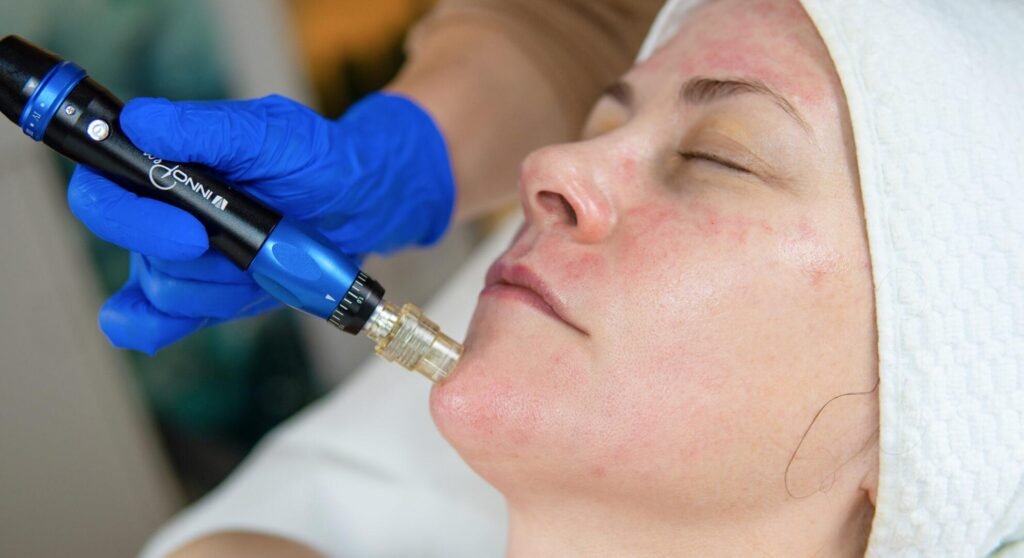
Have you ever wondered why two complexions with similar concerns often respond differently to the same skincare routine? At I Care Beauty Clinic, located in North Vancouver, we believe that achieving healthy, radiant skin begins with understanding that no two complexions are identical. Our clinical approach to microneedling centers on individualized assessment, evidence-informed protocols, and patient safety above all else.
Microneedling, also known as percutaneous collagen induction, is a versatile, non-invasive procedure designed to support your skin’s biological renewal processes. Rather than applying a standard template to every face, we calibrate treatment depth, technique, and topical serum integration for each individual. By tailoring every session to your unique dermal characteristics, we help address structural skin concerns while prioritizing comfort, skin barrier integrity, and natural-looking outcomes.
How Does Microneedling Support Dermal Health?
How exactly does micro-stimulation encourage the skin to refresh itself from within? Microneedling uses fine sterile needles to create controlled microchannels in the skin at depths selected according to the treatment area, skin condition, and individual treatment goals. Rather than relying on thermal heat or aggressive surface ablation, traditional microneedling operates through gentle mechanical stimulation.
These controlled micro-injuries initiate the skin’s natural healing response and support collagen and elastin remodeling over time. Because traditional microneedling is a non-thermal treatment, it does not generate the thermal energy associated with certain laser therapies, making it a versatile option that may be considered for a broad range of skin types. However, treatment suitability and settings must always be determined individually following a clinical evaluation.
What Skin Concerns Can Microneedling Address?
Are you curious whether microneedling aligns with your specific skincare goals? Because percutaneous collagen induction supports progressive tissue remodeling, a customized care plan can address a variety of common structural and textural concerns across both face and body.
Depending on patient suitability, a microneedling facial treatment in North Vancouver may help improve the appearance of fine lines and early wrinkles by supporting underlying dermal matrix density. It may also improve the visual appearance of certain atrophic acne scars and mark tissue by encouraging gradual collagen remodeling. Furthermore, patients looking to refine uneven skin texture, reduce the visual appearance of enlarged pores, or encourage a more balanced tone often find that structured sessions support cellular turnover and skin suppleness over time.
How Are Topical Serums Tailored to Your Complexion?
Why is product selection during and after microneedling so critical? At I Care Beauty Clinic, we do not believe in one-size-fits-all treatments. Following the creation of microchannels, selected professional topical products may be incorporated into your session based strictly on clinical suitability, skin barrier health, and your specific concerns.
Depending on the treatment protocol, hyaluronic acid may be introduced to deliver intensive surface hydration that calms and plumps the skin. Antioxidant support in the form of Vitamin C or E formulations can help guard against environmental stressors, while peptide complexes offer structural support during the post-treatment recovery phase. Advanced topical formulations, such as growth factors or PDRN (salmon DNA) products, may be evaluated and incorporated when clinically indicated for your specific care plan, always in strict compliance with Canadian professional standards and regulatory guidelines.
Are You a Suitable Candidate for Microneedling?
Is microneedling the right step for your current skin state? While microneedling is a well-tolerated procedure, treatment suitability must be evaluated based on your current skin condition, medical history, and specific goals. A comprehensive clinical consultation is always conducted prior to proceeding to ensure that treatment is both appropriate and timely.
Certain conditions require careful timing or management before treatment can begin. For example, microneedling directly over active inflammatory acne is avoided to prevent localized irritation or cross-contamination. Similarly, active skin barrier disruptions, such as eczema flare-ups, rosacea, open wounds, or active infections, must fully resolve first. Patients with a recent history of oral isotretinoin (Accutane) within the past six months, or those prone to cold sores, will receive specific clinical guidance to ensure their skin is thoroughly prepared.
How Should You Care for Your Skin Before and After Treatment?
How can you actively support your skin to achieve the smoothest recovery and best possible experience? Proper pre- and post-treatment care protects your healing skin barrier and ensures the natural collagen induction process unfolds uninterrupted.
Pre-Treatment Preparation Guidelines
In the five to seven days leading up to your session, it is important to discontinue topical retinoids, exfoliants, topical antibiotics, and hydroxy acids, as well as waxing or depilatory treatments on the target area. To allow the body’s essential natural inflammatory response to take place, non-steroidal anti-inflammatory drugs (NSAIDs) such as ibuprofen or Advil should be avoided for three days prior. Avoid blood-thinning agents for one week prior to minimize bruising, and refrain from shaving the treatment area on the day of the procedure to prevent added surface irritation.
Post-Treatment Aftercare & Healing Timeline
Following your session, caring for your skin requires a gentle, minimalist approach. During the first 24 hours, cleanse the skin gently using cool water and mild cleanser, using clean hands to pat dry. To preserve the biological inflammatory process necessary for collagen remodeling, do not apply ice, arnica, or anti-inflammatory medications to the face for one week post-procedure (Tylenol may be used if mild soreness occurs).
Over the first one to three days, skin typically exhibits a sunburn-like pinkness, accompanied by mild tightness or temporary swelling. Between days three and seven, light dryness or flaking may occur as cellular turnover increases; it is essential to allow this skin to shed naturally without picking or scrubbing. Avoid direct sun exposure and tanning for at least two weeks, apply broad-spectrum SPF 30 or higher after 48 hours, and refrain from heavy exercise, saunas, and mineral makeup for the recommended post-care window.
Treatment Time, Recovery and Treatment Planning
What does the journey toward revitalized skin look like over time? Appointment duration varies depending on the treatment area, preparation, and individualized treatment protocol. A topical numbing product may be used when appropriate to help improve patient comfort during treatment, though treatment sensation naturally varies according to needle depth, treatment area, and individual sensitivity.
Microneedling is commonly performed as a structured series of treatments when clinically appropriate, with treatment plans individualized according to the patient’s concerns and response. While early surface freshness may be noticed shortly after initial healing, structural collagen remodeling develops progressively over several weeks. A customized treatment plan may support progressive improvements in skin texture and overall skin appearance over a series of sessions spaced four to six weeks apart.
Begin Your Skin Rejuvenation Journey in North Vancouver
Are you ready to discover a personalized, evidence-informed approach to your skincare goals? If you are exploring options for microneedling skin rejuvenation in North Vancouver, our dedicated team at I Care Beauty Clinic is here to guide you with clinical expertise and patient-centered care.
Contact us today to schedule your individualized skin evaluation and begin a tailored care plan designed specifically for your skin.
Frequently Asked Questions
Treatment sensation varies depending on the treatment area, selected needle depth, and individual sensitivity. A topical numbing product may be used when appropriate to improve patient comfort throughout the process.
The number of sessions and treatment intervals vary according to the patient’s skin concern, treatment goals, treatment intensity, and biological response. A personalized treatment plan is recommended following your clinical skin assessment.
Temporary redness, sensitivity, dryness, or other expected post-treatment skin responses may occur. The degree and duration of post-treatment effects vary between individuals and depend on the selected treatment intensity and depth.
Microneedling may help improve the appearance of certain atrophic acne scars by stimulating a controlled healing response and supporting collagen remodeling. Suitability depends on the type and severity of scarring, skin condition, and individual assessment. Active inflammatory acne must be professionally evaluated and managed before treatment.
Visible changes develop differently between individuals. Some patients may notice early changes in skin freshness following initial healing, while deeper collagen remodeling and improvements in texture develop progressively over time based on the customized care plan.